तुम क्या ढूंढ रहे हो
?
रोबोटिक विज़न सिस्टम के लिए कौन सा लेंस सबसे अच्छा है?
Apr 03, 2026रोबोटिक विज़न सिस्टम के लिए सही लेंस का चयन केवल स्पष्ट छवि प्राप्त करने तक ही सीमित नहीं है—यह सीधे तौर पर प्रभावित करता है सटीकता, गहराई का अनुभव और सिस्टम की विश्वसनीयताचाहे आप निरीक्षण, पिक-एंड-प्लेस या एआई-संचालित स्वचालन के लिए रोबोटिक आर्म का निर्माण कर रहे हों, वास्तविक दुनिया की स्थितियों में आपका सिस्टम कितना अच्छा प्रदर्शन करता है, इसमें लेंस एक महत्वपूर्ण भूमिका निभाता है।
इस गाइड में, हम आपको यह बताएंगे कि कैसे चुनें रोबोटिक विज़न सिस्टम के लिए सर्वश्रेष्ठ लेंसयह व्यावहारिक इंजीनियरिंग आवश्यकताओं पर आधारित है, न कि सामान्य विशिष्टताओं पर।
कई परियोजनाओं में, टीमें सेंसर और एल्गोरिदम पर बहुत अधिक ध्यान केंद्रित करती हैं, लेकिन लेंस को अनदेखा कर देती हैं। वास्तव में, लेंस ही परिभाषित करता है:
गलत लेंस का चुनाव विकृति उत्पन्न कर सकता है, किनारों की स्पष्टता को कम कर सकता है या दृश्य क्षेत्र को सीमित कर सकता है - जिससे पहचान और स्थिति निर्धारण में त्रुटियां हो सकती हैं।
विभिन्न अनुप्रयोगों के लिए अलग-अलग ऑप्टिकल दृष्टिकोणों की आवश्यकता होती है। कुछ सबसे सामान्य विकल्पों में शामिल हैं:
इनका व्यापक रूप से बुनियादी निरीक्षण और वस्तु पहचान के लिए उपयोग किया जाता है। ये तब अच्छी तरह काम करते हैं जब गहराई का बोध आवश्यक न हो।
जब आपके रोबोट को किसी बड़े क्षेत्र की निगरानी करने की आवश्यकता होती है—जैसे कि कन्वेयर बेल्ट या बहु-वस्तु वातावरण—तो एक रोबोटिक दृष्टि के लिए वाइड एंगल लेंस अधिक कैमरे जोड़े बिना कवरेज का विस्तार करने में मदद करता है।
रोबोटिक आर्म और 3डी पोजिशनिंग जैसी गहराई की अनुभूति की आवश्यकता वाले अनुप्रयोगों के लिए, रोबोटों के लिए स्टीरियो विज़न लेंस ये आवश्यक हैं। ये दो सिंक्रनाइज़्ड इमेज कैप्चर करके गहराई का पता लगाने में सक्षम बनाते हैं, जिससे सिस्टम दूरी की सटीक गणना कर पाता है।
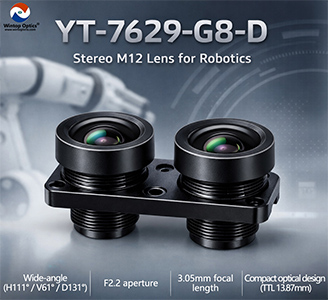
फोकस की लंबाई यह निर्धारित करती है कि आपका दृश्य कितना चौड़ा या संकीर्ण है।
रोबोटिक भुजाओं के लिए संतुलन महत्वपूर्ण है: कार्यक्षेत्र को देखने के लिए पर्याप्त कवरेज, लेकिन सटीक स्थिति निर्धारण के लिए पर्याप्त विवरण।
रोबोटिक विज़न में विकृति सबसे अधिक अनदेखी किए जाने वाले कारकों में से एक है।
A मशीन विज़न के लिए कम विरूपण वाला लेंस यह सुनिश्चित करता है कि सीधी रेखाएँ सीधी रहें और माप सटीक रहें। यह विशेष रूप से निम्नलिखित स्थितियों में महत्वपूर्ण है:
ज्यामितीय सटीकता बनाए रखने के लिए वाइड-एंगल रोबोटिक सिस्टम में अक्सर -18% से कम विरूपण वाले लेंस को प्राथमिकता दी जाती है।
औद्योगिक वातावरण में प्रकाश की स्थिति में काफी भिन्नता हो सकती है।
एक लेंस जिसका अपर्चर इस प्रकार है एफ2.2 यह प्रकाश ग्रहण और क्षेत्र की गहराई के बीच अच्छा संतुलन प्रदान करता है, जिससे यह नियंत्रित और अर्ध-परिवर्तनीय प्रकाश व्यवस्था दोनों के लिए उपयुक्त है।
लेंस को सेंसर से मिलाना बेहद महत्वपूर्ण है।
A सेंसर के लिए CRA-अनुकूलित लेंस यह छवि में प्रकाश का उचित वितरण सुनिश्चित करता है, जिससे किनारों की स्पष्टता बढ़ती है और विग्नेटिंग कम होती है। यह तब और भी महत्वपूर्ण हो जाता है जब एम्बेडेड रोबोटिक सिस्टम में उपयोग किए जाने वाले कॉम्पैक्ट सेंसर के साथ काम किया जाता है।
रोबोटिक्स में, स्थान अक्सर सीमित होता है।
A रोबोटिक प्रणालियों के लिए कॉम्पैक्ट लेंस कम कुल लंबाई (TTL) के साथ एकीकरण आसान हो जाता है, खासकर रोबोटिक भुजाओं या तंग बाड़ों में। मानक इंटरफेस जैसे रोबोटिक कैमरों के लिए M12 लेंस साथ ही, स्थापना और प्रतिस्थापन को भी सरल बनाते हैं।
सभी लेंस औद्योगिक वातावरण के लिए नहीं बनाए जाते हैं।
यदि आपका सिस्टम कठिन परिस्थितियों में काम करता है, तो एक उपयुक्त विकल्प चुनना IP69 रेटिंग वाला कैमरा लेंस इससे काफी फर्क पड़ सकता है। औद्योगिक-ग्रेड ऑप्टिकल लेंस इन्हें निम्नलिखित परिस्थितियों का सामना करने के लिए डिज़ाइन किया गया है:
यह फैक्ट्री स्वचालन, खाद्य प्रसंस्करण या आउटडोर रोबोटिक्स जैसे अनुप्रयोगों के लिए विशेष रूप से महत्वपूर्ण है।
तो, रोबोटिक विज़न सिस्टम के लिए कौन सा लेंस सबसे अच्छा है?
इसका उत्तर आपके एप्लिकेशन पर निर्भर करता है—लेकिन सामान्य तौर पर, एक आदर्श समाधान में निम्नलिखित विशेषताएं होनी चाहिए:
उदाहरण के लिए, रोबोटिक आर्म विज़न सिस्टम में, जिन्हें गहराई की अनुभूति की आवश्यकता होती है, कम विकृति, व्यापक कोण कवरेज और औद्योगिक सुरक्षा के साथ स्टीरियो लेंस सेटअप अक्सर यही सबसे प्रभावी विकल्प होता है।
सही का चयन करना रोबोटिक विज़न लेंस बात सिर्फ उच्चतम विशिष्टताओं को चुनने की नहीं है—बात यह है कि आपके विशिष्ट उपयोग के लिए ऑप्टिक्स, मैकेनिक्स और टिकाऊपन का सही संयोजन चुनना।
फोकस की लंबाई, विरूपण और पर्यावरणीय प्रतिरोध जैसे कारक प्रदर्शन को कैसे प्रभावित करते हैं, यह समझकर आप शुरू से ही अधिक विश्वसनीय और सटीक दृष्टि प्रणाली का निर्माण कर सकते हैं।
यदि आप किसी रोबोटिक विज़न सिस्टम पर काम कर रहे हैं और सही लेंस चुनने में मदद की आवश्यकता है, तो हम आपकी सहायता के लिए यहाँ मौजूद हैं।
पर विंटॉप ऑप्टिक्सहम इसमें विशेषज्ञता रखते हैं औद्योगिक अनुप्रयोगों के लिए अनुकूलित रोबोटिक विज़न लेंस, स्टीरियो लेंस समाधान और एम12 लेंस डिज़ाइन।—आपकी सटीक आवश्यकताओं के अनुरूप।
फ़ोन/व्हाट्सएप: +86 153 0268 9906
ईमेल: yorty@yuntal.com
बेझिझक हमसे संपर्क करें—हमें आपके प्रोजेक्ट के लिए सही ऑप्टिकल समाधान खोजने में मदद करके खुशी होगी।
 हमारे न्यूज़लेटर्स के लिए साइन अप करें
टेलीफोन : Overseas contact Lina : 86 153-0268-9906
Overseas emial : yorty@yuntal.com
WhatsApp : +86 153-0268-9906
E1108, Jinbolong Building, Longhua, Shenzhen,Guangdong, China


Friendly Links :
whatsappकॉपीराइट © 2026 WINTOP OPTICS CO., LTD.. सर्वाधिकार सुरक्षित .粤ICP备2025439823号-1
 IPv6 network supported.